
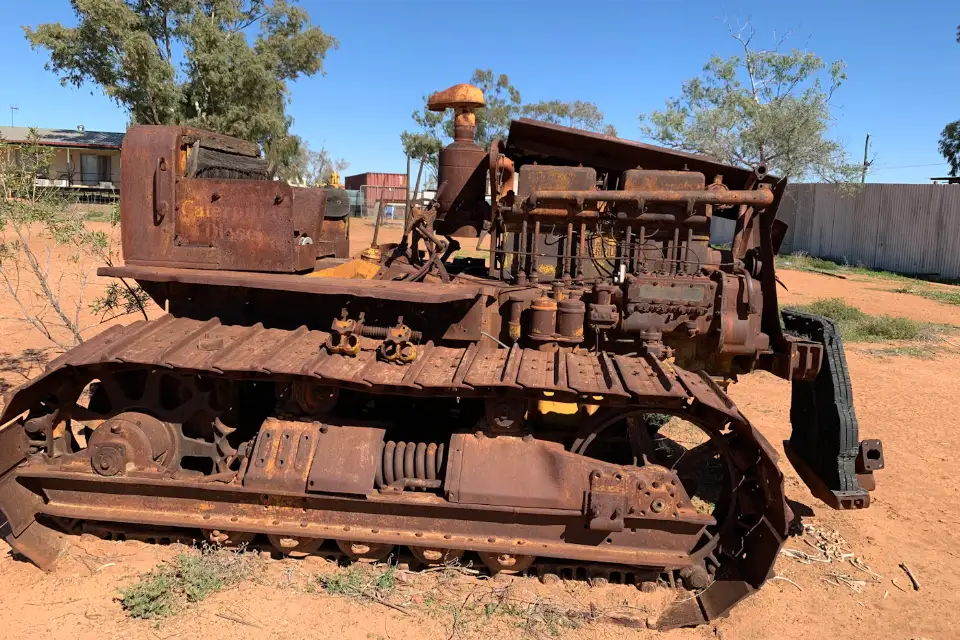
Track frames, rollers and an engine block, all still worth hauling.
Home › Hauling a crawler
Lowbeds, winches and permits
How a crawler gets hauled
Moving a tracked machine is the part most sellers worry about. Here's how we do it, so you know what to expect on pickup day.
Machine report
Tell us what's sitting there
or call 236-239-0420
Spec sheet
Which deck for which machine
| Minis and CTLs | Tilt deck or small trailer. |
|---|---|
| Small dozers and loaders | Tilt deck or lowbed. |
| Mid-size machines | Lowbed. |
| Large machines | Lowbed, sometimes with parts removed or an oversize permit. |
| Cranes | Several loads, planned in advance. |
On the day
What we need from you
- A clear path from the machine to where the truck can park
- Gates open and vehicles moved
- Someone who can sign the bill of sale
- Proof of ownership, and a lien release if needed
Moving tracked machines safely
Every machine and site is a little different. These are the things we plan for.
Running machines
If it tracks, it can usually drive onto the deck. That's quick. Tell us whether it tracks straight and whether the brakes hold.
Dead machines
Dead machines get winched. Locked tracks skid up the ramp. It's slower but routine, and the deck is set up for it.
Height
Cabs, canopies and booms add height. Some routes have low bridges, so we check. Tell us the overall height if you know it.
Width and weight
Wide or heavy loads need provincial oversize permits and set routes. The hauler arranges them. We plan the permits and routes before the day.
Soft ground
A loaded lowbed is heavy. On soft fields we wait for dry weather or load from firm ground. Tell us how far the machine sits from firm ground. A short winch to firmer ground is often all it takes.
City sites
Street loading in the city may need a permit or a lane closure. Site managers usually know the process. Tell us the site contact and the loading hours.
Removing parts for transport
Some machines are lighter or lower once a bucket, blade or counterweight comes off. We decide that before pickup so it doesn't surprise anyone.
Loading dead machines safely
Winching a dead machine is slow and careful work. Nobody stands near the cable while it's under load. We plan the winch angle before the line goes on.
Chaining down
Every machine is chained at the frame and its attachments are lowered and secured before the truck moves. Loose parts are strapped down or carried separately.
Weather
Rain makes ramps slippery and fields soft. We'll reschedule rather than risk a bad load. Tell us if the access floods in wet weather.
Tilt decks and lowbeds
Small machines go on a tilt deck, while larger ones go on a lowbed. The machine's weight, width and height decide which, and we send the one that suits it.
Long lanes and farm bridges
A loaded lowbed is heavy. Light farm bridges, culverts and soft lanes matter, so tell us what's on the way in. We plan routes around weight limits.
After the load
Once the machine is chained down and the paperwork is signed, it goes to our yard, where fluids are drained and parts are sorted. You don't need to do anything else.
Straight answers
Questions we get
Do I pay for the haul?
No. The haul is included in the quote.
How long does loading take?
Usually under an hour for a running machine. Dead machines take longer.
Can you load from a tight lot?
Often. Photos help us plan.
Can you load in the rain?
Sometimes. If the ramp or field isn't safe, we reschedule.
Do you need permits?
For wide or heavy loads, yes. We arrange them.
Can you load from a city street?
Often, yes. A permit may be needed, and site managers usually know the process.
Will loading damage my yard?
We try not to. On soft ground we wait for dry weather or load from firm ground, and we fill ruts we make where we can.
Do you haul machines from job sites?
Yes. Give us the site contact and the loading hours, and we'll plan around other trades and traffic.
Can you haul a machine with a cab?
Yes. We check the overall height against the route before the day.
Worried about moving it?
Call and describe the spot. We've probably loaded from worse.